
Mae

This is Mae, choosing a Sheela-na-Gig sculpture they made for a self-portrait.
And here’s why that makes so much sense:
Sheela-na-Gigs, stone figures from pre-Christian times, depict women more or less aggressively presenting their vulvas. They seem to be remnants of Central European pagan fertility cults. In the Middle Ages, after the rise of Christianity, those figures weren’t suddenly abandoned. Instead, people integrated them into churches, city walls and such to provide magical protection against evil and death (and somehow their copulation–readiness was ignored by the church).

Both, the raw representation of sexuality but even more the magical symbolism are integral parts of Mae’s multidisciplinary work. When I ask if they are serious about all the magic, Mae makes it clear:
“I unequivocally believe in the paranormal, the occult, in gods and the infinite of the unseen. I practice mediumship, magnetism, rituals and divination. I used to be in a coven! So, I’d say I'm pretty serious about it.”

Mae then mentions that polytheistic beliefs had always been a passion and that, growing up in an atheist household, a little Mae would pray to Poseidon in secrecy. Which adds another wrinkle to a seemingly quite unconventional childhood.
With roots in Southern Europe, Mae grew up in New York and then moved to Bangkok as a child. As a teenager, they ultimately ended up in Paris. And it’s almost like they took a souvenir from every station of their coming-of-age-odyssey and incorporated it into their drawing style.

“My drawing style has some southeast Asian flair, mostly found in the eyes and hands of my characters, referencing Buddha in Thai folk art. My other big influence is my move to Europe, where my origins are from. Re-connecting to my lost Mediterranean heritage (…) the Tarot de Marseilles, Italian Coptic tattoos and medieval etchings are central to my style now.”

Thematically, beneath the spiritual and political topics, Mae’s work reflects their own life story which they describe as a series of traumatic events, resulting in examinations of survival and resilience. But although rawness and violence are present in Mae’s motifs (which seem to be on the brink of taking a darker turn sometimes) their designs are less a stage for gore and more for disturbance.

“I want to speak of deep melancholy with confetti and laughter”, Mae says, adding that they treat darker themes with a child-like habitus, ultimately creating a feeling of weirdness. Somehow funny but also slightly unsettling. It’s an understanding of clownery that stems from the time when Mae was part of a theatre group.
“Our play was a circus-y burlesque creep show. We had a mute accordionist clown, an actress playing a marionette and a fake ventriloquist. We toured around France and terrified everyone. This entrance into the universe of theatre clowns absolutely rocked my world. I finally understood the essence of what I was trying to do as an artist.”

The effect of grotesqueness plays an important role here. Remember the Sheela-na-Gig? No wonder, Mae likes to mirror themselves in an anasyrma, which is how you call the female act of offensively displaying one’s genitals. (Feel free to memorize this term and bring it up casually at any gathering that needs an icebreaker).

The anasyrma is more or less the epitome of grotesque gestures since ancient Greece. But its implications go way beyond uncomfortable laughter: Traditionally, it also speaks of political empowerment. And in the 21st century it saw a comeback as a political gesture, especially in African protest movements. Does Mae see themselves as a political artist as well?

“I don’t believe art can be apolitical; it never has been.” Mae explains that they developed an anarchist worldview from studying the laws of nature, which led them to see human interactions through an anti-speciesist lens. “The arrogant notion that humans are superior to other animals, absolutely baffles me. I’m obsessed with scientific and philosophical research on animal and plant linguistics, like communication through mycelium networks. Community and reciprocity are key and I wish we would remember more often that we are also nature and shouldn’t be understood separate from it or from each other.”

Practically, after years of political activism, this has led to the formation of the Fat Cat Studio in Paris. “Opening up an anarchist, not-for-profit tattoo shop in Paris has been a dream come true. In an industry that so often takes advantage of the artists and creates unsafe environments to work but also get tattooed in, I wanted to create a space where no one profits off each other, with strong socio-political ethics and a sense of community.”
We’re very happy and proud that Mae will share their utopia with us at the sad shop.
You can follow Mae on Instagram.
You can have a look at some of Mae’s artwork.
You can book a tattoo with Mae.
You can book a divination with Mae.
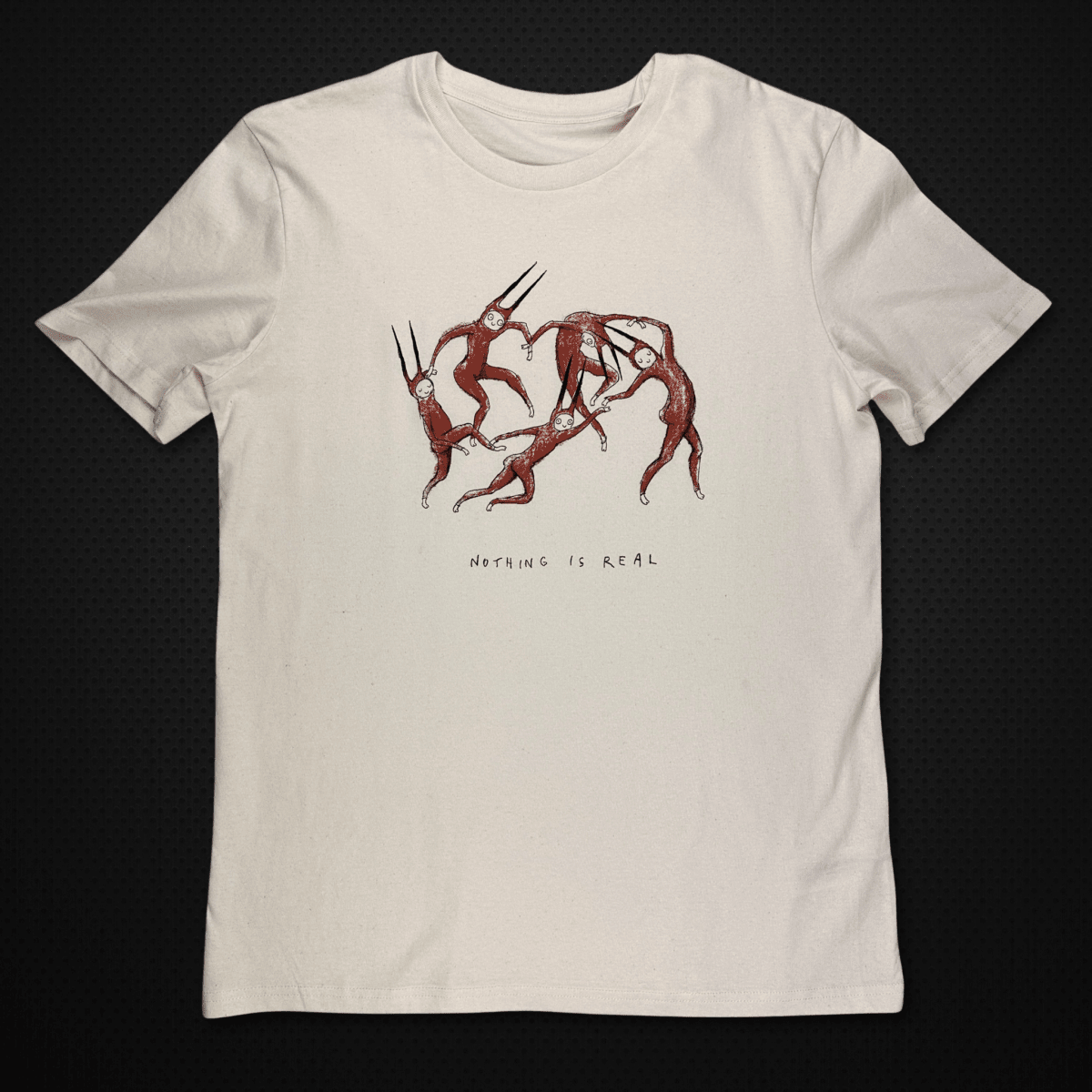
You can shop Mae’s stuff.



Weltweiter Versand
Versandkostenfrei ab 80€